
Me, a very patient horse, and my girl Lily—who definitely thinks she's in charge of the whole operation.
Here's the thing about horses, they'll follow you anywhere once they trust you. Not because you've clipped them to a lead rope and given them no choice, but because they've genuinely decided you're worth following. And honestly? That's the whole point of groundwork.
Let's be honest, when most people hear "groundwork," they immediately think it's something you do with a spooky youngster or a horse with "issues." You know, the one who throws tantrums when you try to load them, or spins away from the mounting block like you've just asked them to walk into a dragon's den. But groundwork isn't punishment, and it's definitely not just damage control. It's the foundation of everything, the conversation you have with your horse before you ever swing a leg over their back.
And that conversation? It starts way before you even pick up a lead rope.
The Liberty Mindset (Even When You're Not Actually at Liberty)
I'll admit, the first time someone told me to "work on connection at liberty," I thought they meant I should just... let my horse wander around the arena while I stood there looking hopeful. (Spoiler: that's not it.)
What they actually meant was this, your horse should want to be with you. Before you ask them to yield their hindquarters or back up on a line, they should be choosing to follow you, to stay near you, to tune into your body language because they're interested in what you're communicating. Not because they're trapped on a 12-foot rope.
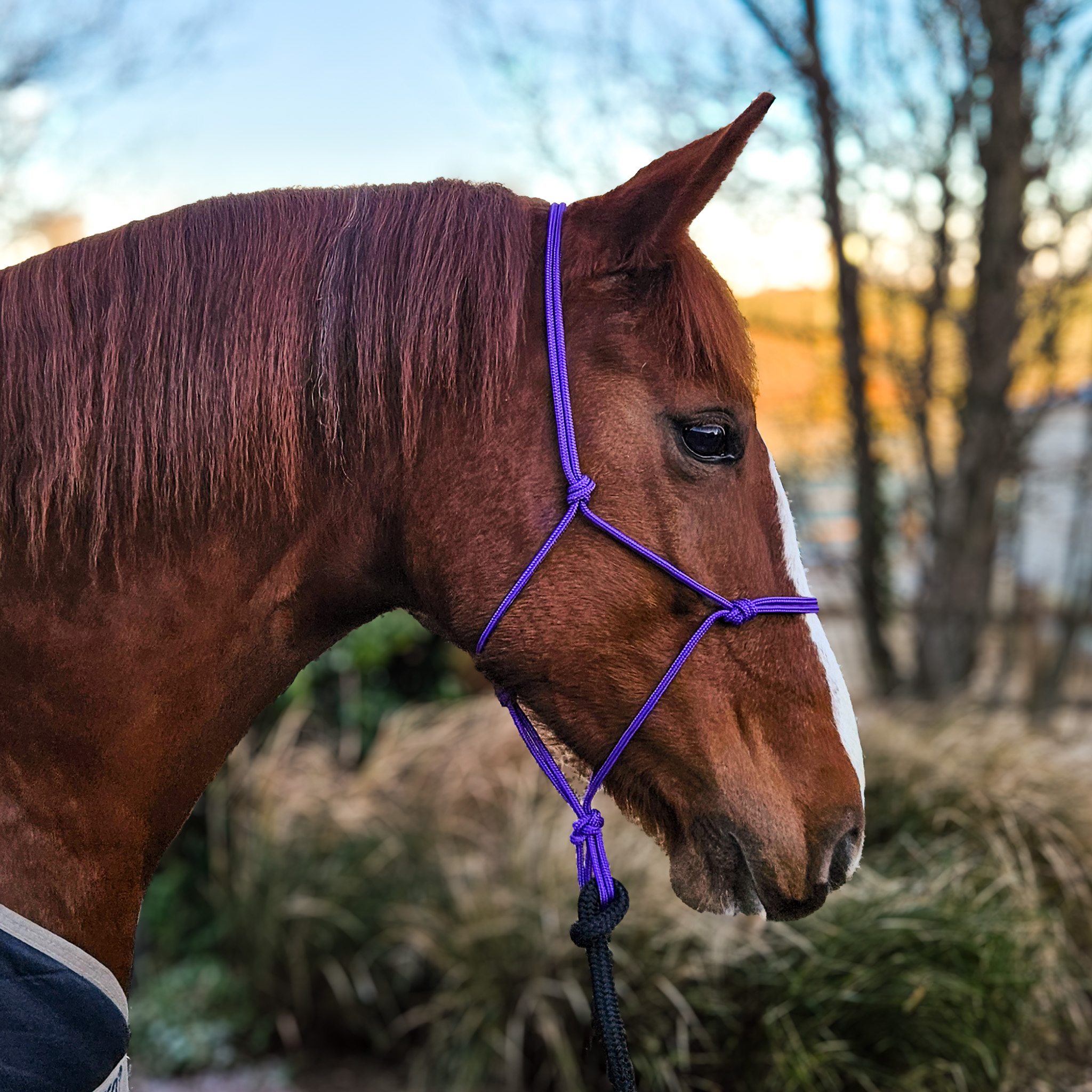
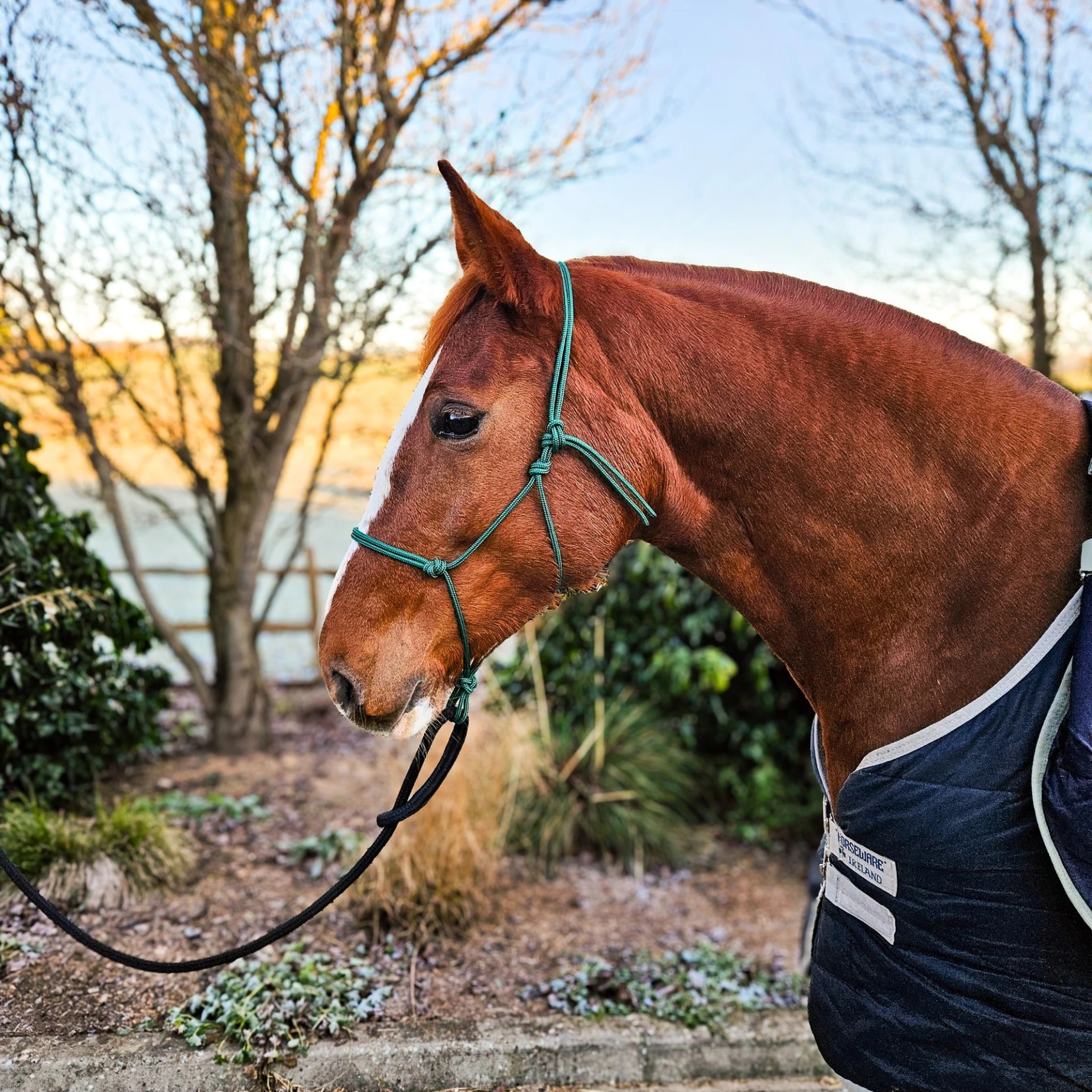
Patsy loves her new job as Ponies and Pups top model! She manages to stay incessantly hungry, happy, and beautiful in perfect harmony (and somehow always regal, even when she's being a bit neurotic).
That foundation changes everything. Because once your horse is genuinely connected to you, emotionally, not just physically tethered, the groundwork exercises become a conversation, not a lecture. They're listening because they want to understand you, not because they have no other option.
And that's where a good rope halter comes in. But we'll get to that in a minute.
Why Rope Equipment Makes All The Difference
Right, so you might be thinking "a halter is a halter, surely?" And I used to think the same thing until I started working with rope halters, properly fitted, well-made ones that sit exactly where they should and communicate with precision rather than just... existing on your horse's face.
Here's the thing about rope: it's about feel. A heavy webbing headcollar diffuses pressure across the entire noseband and poll. It's a bit like trying to have a whispered conversation through a megaphone, the message gets muddled. But a rope halter? The knots sit at specific pressure points, so when you lift your hand or apply the gentlest ask, your horse feels exactly what you're communicating. It's clearer. Sharper. More respectful, actually.
And the weight, or lack of it, matters more than you'd think. A bulky headcollar can feel like white noise on your horse's face. They sort of tune it out. But a lightweight rope halter only creates sensation when you're actively communicating. The rest of the time, it's barely there. So when you do ask something, your horse actually notices.
All our rope halters at Ponies & Pups are handcrafted here in East Sussex using premium rope, and I'm slightly obsessed with getting the knot placement just right (it’s a personality trait at this point). Because if the equipment isn't helping the conversation, what's the point?
Building Trust Through Yielding (Without Becoming a Drill Sergeant)
Let's talk about yielding exercises—those foundational movements that form the vocabulary of groundwork. Asking your horse to move their hindquarters away from pressure, to back up softly, to bring their head down, to step their shoulder over…
These aren't tricks. They're communication.
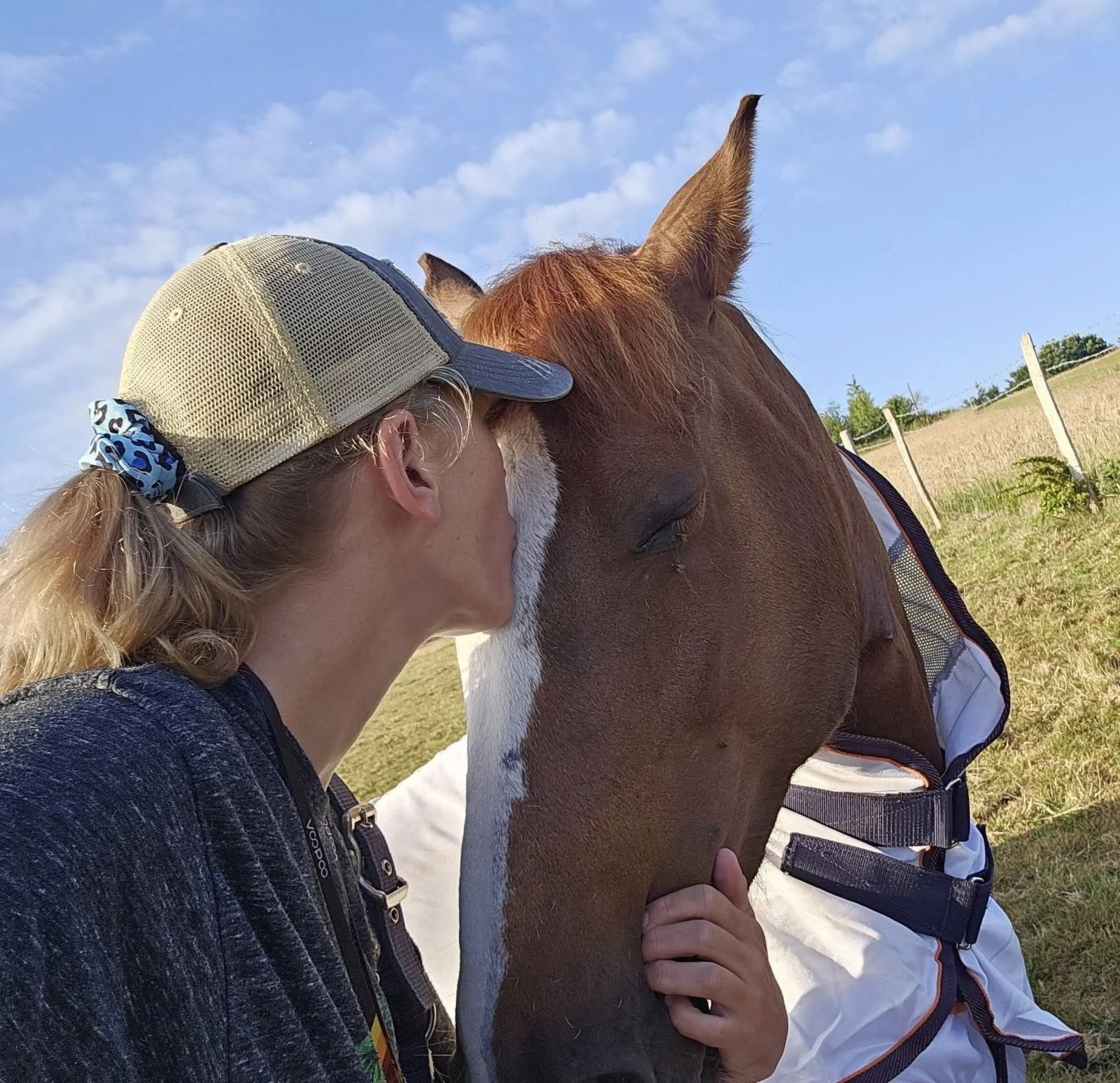
Sharing a quiet moment with Patsy—sometimes the best groundwork is just showing up and being still.
When you ask your horse to yield their hindquarters and they respond immediately—softly—without resistance, that's trust. They're saying, "I understand what you're asking, and I believe you're not going to hurt me, so I'll give you what you want." That moment when you apply gentle pressure behind the girth and they swing their hips away like you've choreographed it together? That's the conversation working.
But here's where people often get it wrong (and I'll be the first to admit I've made plenty of mistakes with my horses in the past—we've all been there), they get so focused on the exercise that they forget about the release. The pressure is the question. The release is the "thank you, that was perfect." Without that immediate release—without that clear, obvious reward—your horse never learns which bit they got right. They just know you kept nagging at them until they accidentally stumbled into the correct answer (which is… not the vibe).
It's like playing the world's most frustrating game of charades where no one tells you when you've guessed correctly. Exhausting for everyone involved.
Start small—one step of yield, immediate release. Then two steps. Then a full circle. Build gradually so your horse can succeed easily and build confidence rather than frustration. If your horse looks confused or worried, I promise you, it's not them. It's your communication that needs adjusting.
And these days, with Patsy, I’m chasing connection over compliance—because she’s not interested in being "managed"… and honestly, neither am I.
Groundwork Isn't About Dominance (It's About Dialogue)
There's this old-school myth floating around that groundwork is about "showing the horse who's boss" or "being the alpha." And honestly? That's rubbish.
Horses don't think in terms of dominance hierarchies the way some people assume. What they do respond to is clarity, consistency, and calm leadership. They want to know what you're asking—and they want to know that you'll keep them safe while they figure it out (preferably without you flapping about like an anxious pigeon).
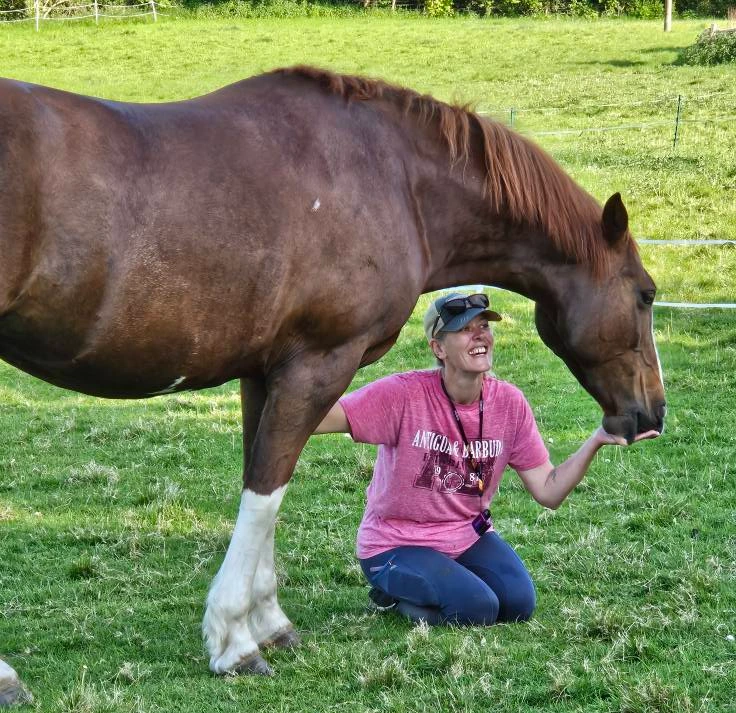
Groundwork isn't a power struggle; it's a cuddle that happens to involve boundaries.
When you're working on the ground—teaching your horse to move away from pressure, to follow the feel of the rope, to soften and bend through their body—you're not conquering them. You're teaching them a language. You're showing them that pressure has meaning, and release is the reward. That your body language can guide them just as clearly as a rope can. That you're predictable and trustworthy and worth paying attention to.
And the equipment you use matters in this dialogue. A good groundwork rope—the kind with just enough weight to give clear communication but not so much that it's clumsy—becomes an extension of your hand. At Ponies & Pups, we make ours from premium rope here in East Sussex with proper thought to length, weight, and feel because when you're trying to have a nuanced conversation with 500kg of horse, your equipment shouldn't be working against you (or tangling itself around your wellies… again).
Desensitisation: Teaching Trust in the Mundane
One of the most overlooked aspects of groundwork is simple desensitisation work. And I don't mean chasing your horse around with carrier bags until they stop bolting (please don't do that). I mean systematically teaching them that new sensations, sounds, and objects are safe because you say they're safe.
Stroke them all over with your hands, yes, even the weird ticklish bits like the belly and groin and ears that they'd rather you didn't touch. Use the lead rope to gently touch their legs, their chest, their hindquarters. Let them learn that things touching them isn't automatically a threat.
This is where the precision of rope equipment really shines. When you're using a rope halter and a properly weighted groundwork rope, you can be so much more subtle in your desensitisation work. You can stroke the rope over your horse's back, let it slide down their legs, swing it gently near their belly, all while maintaining that soft, clear connection to their face. They learn to trust the sensation because they trust you, and the equipment helps you communicate that trust.
The Practical Bits (Because We Can't Just Wax Poetic Forever)
Let's get practical for a moment—here's what actually matters when you're setting up for groundwork:
Equipment: A well-fitted rope halter should sit high on the nose, just below the cheekbones on the hard, bony part—never on the soft cartilage. It needs to be snug enough to prevent slipping (think about 2–3 fingers of space) but loose enough for them to comfortably chew or open their mouth for a cheeky snack. Add a groundwork rope that's long enough to give you working space (we typically use 12–14 feet) but not so long you're tripping over it like some sort of horse-training maypole situation (been there, pretended it was "intentional footwork").
Space: Somewhere your horse can move freely without distractions. This doesn't need to be fancy, a corner of a field works just as well as an arena. Just somewhere they can focus on you rather than what their mate is doing three fields over.
Mindset: Patience. Genuinely. If you've got ten minutes, work for eight and stop on a good note. If you're frustrated, your horse will feel it—and everything gets muddy. Better to end early and successful than push through and create tension.
Timing: Your release needs to be immediate. I mean the second your horse gives you the right answer. Not three seconds later when you've processed that they did the thing (while also "helping" your own hands to stop doing jazz-fingers). The instant they respond correctly, release the pressure. That's the reward. That's the "yes, that was it!"
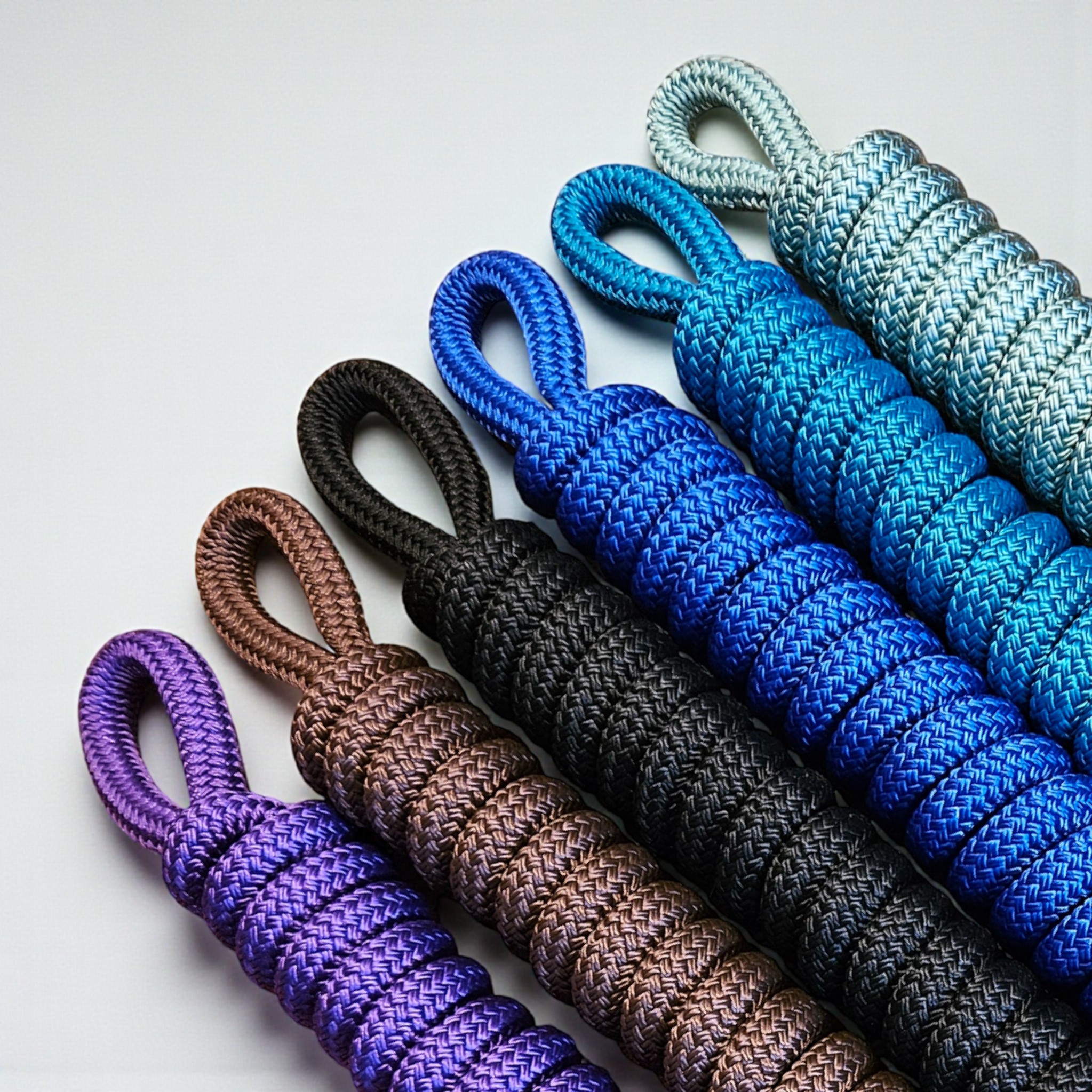
A rainbow of ropes, because choosing just one colour is honestly the hardest part of my job.
It's Not Just For "Problem Horses" (It's For All of Us)
Right, let's address this properly, groundwork isn't remedial work. It's foundational work. It's not something you only do when your horse has developed bad habits or scary behaviours. It's what you do to prevent those things from developing in the first place.
Every horse, from the perfectly-behaved 20-year-old schoolmaster to the gangly three-year-old who's just learning about life, benefits from clear, consistent groundwork. It builds confidence, establishes communication, creates trust, and gives both of you a shared language to fall back on when things get tricky.
I do groundwork with my own horses regularly, not because they're problematic (though let's be honest, they have their moments), but because it keeps our conversation clear. It's like... relationship maintenance, but with more mud and significantly more hair everywhere.
The Equipment We Use (And Why It Matters)
I know I've mentioned it a few times already, but the quality of your rope equipment genuinely affects how your groundwork feels. When we're making rope halters and groundwork ropes here at Ponies & Pups, we're thinking about how they'll actually function in your hands, on your horse's face, in the muddy reality of everyday horsemanship.
The right rope halter should fit precisely, not too tight (that's constant nagging), not too loose (that's unclear communication). The knots should sit exactly where they need to for clear pressure and release signals. And the rope itself should have enough substance to give clear feel without being so heavy it's like swinging a ship's mooring line around.
Because at the end of the day, groundwork is about communication. And communication requires tools that help rather than hinder.
Going Beyond the Lead Rope
So here's where we circle back to the title, going beyond the lead rope. Because ultimately, that's what we're working toward, isn't it? That moment when your horse is so tuned in, so connected, so trusting that the rope is almost irrelevant. When you can move them with your body language, guide them with a thought, stop them with a breath.
That doesn't happen overnight. It happens in hundreds of small moments, when you ask for one step back and release immediately. When your horse chooses to follow you across the field. When they soften their eye and drop their head because you've asked gently and they know you'll reward the try.
It happens when you show up consistently, communicate clearly, and use equipment that helps you do both.
And honestly? That's the real magic of groundwork. Not that you can make your horse do things, but that you can build a relationship where they want to understand you, where trust runs both ways, where the lead rope is just a safety net rather than the whole conversation.
Right, I need to go: there's a certain pony who's convinced it's dinner time (it's not, but she's very persuasive), and I've got rope halters to finish. But if you're looking to start or improve your groundwork game, have a look at what we make: everything's handcrafted here in East Sussex—BioThane® bits, premium rope bits, the whole muddy lot—with proper thought to how it actually functions in real life.
Because groundwork should be a conversation, not a battle. And the right equipment makes all the difference.
Shop The Precision Range
Featherlight feel ☁️. Precision control 💎. Silent Connection.